“Local” is a funny word on a honey label. I’ve seen it on jars from the other end of the country. I’ve seen it on jars where the only local thing was the shop.
So if you’re in Barnsley and you want honey that really was made down the road, here’s what I’d look for.
What should “local” mean?
A honey bee will forage up to about three miles from its hive, sometimes further when times are hard. So honey from a hive in Staincross is made from the flowers, trees and hedgerows within a few miles of Staincross. That’s as local as food gets.
For me, local honey means you can name the beekeeper and roughly where the hives are. If the person selling it can’t tell you that, it isn’t local in any meaningful sense.
What’s in Barnsley honey?
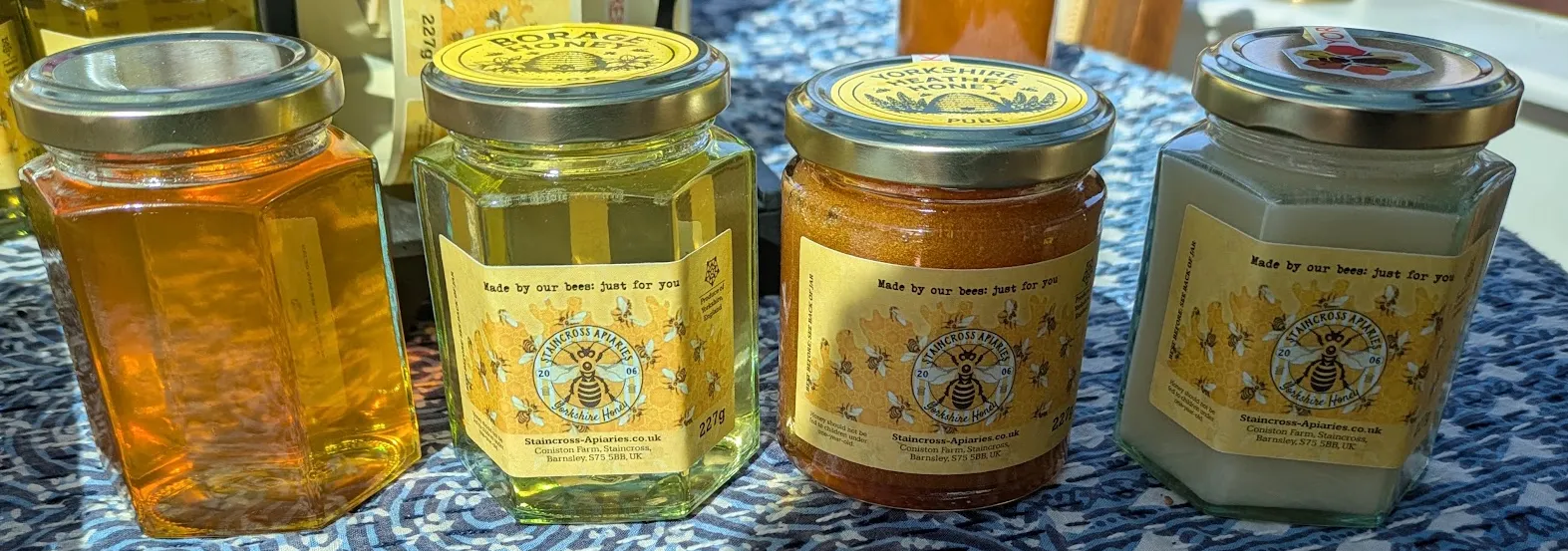
It changes through the year, which is one of the joys of it. Our bees work the hedgerows, gardens, field margins and trees around Staincross and out towards the hills near Penistone. In spring it might be blossom and early flowers. In summer, clover, bramble and whatever’s flowering in the gardens and fields. In autumn they’re on the ivy.
That’s why our honey doesn’t taste the same every time. It’s not meant to. Have a read of what makes Yorkshire honey special for more on that.
Check the label
Anyone selling honey has to put their name and address on the label, along with the country of origin. A small local producer’s jar should tell you exactly who made it. If you’re looking at “produce of more than one country” or “blend of EU and non-EU honeys”, it’s not local, whatever the picture on the front suggests.
Where to buy
You can order our honey through the online shop and collect it from us at a time that suits. Farm shops, markets and your local beekeeping association are also good places to look. Barnsley Beekeepers can point you towards members who sell honey nearer to where you live.
Wherever you buy, ask the question. Where are your hives? A real beekeeper will be delighted you asked.
Does local honey help with hay fever?
I get asked this a lot, so I’ll be straight with you. Lots of people swear by a spoonful of local honey, and I’m not going to argue with them over breakfast. But the science doesn’t back it up as a treatment, and most hay fever is caused by grass and tree pollen that bees don’t collect much of anyway. Buy local honey because it tastes wonderful and supports local bees. That’s reason enough.
Come and see where it’s made
If you’d like to see the hives for yourself, our beekeeping experience takes small groups into the apiary at Coniston Farm. You’ll never look at a jar of honey the same way again.