
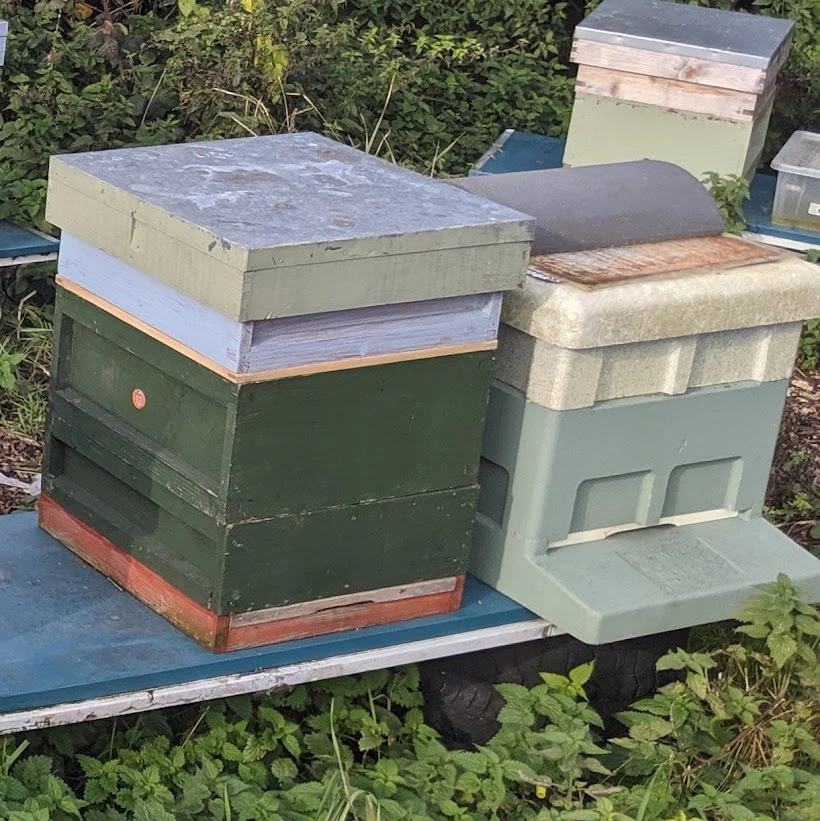
Every autumn the same question does the rounds on the beekeeping forums. Someone asks about nadiring and within about four replies somebody’s calling it fashionable nonsense and somebody else is swearing by it. So I thought I’d have a go at explaining what’s actually going on, because once you strip away the arguing, it’s not that complicated.
Nadiring just means putting a box underneath the brood box instead of on top. The name comes from “nadir”, the lowest point, opposite of zenith. Somebody on a forum pointed out it’s not even really a proper modern word. Beekeepers do like borrowing old words and making them do new jobs.
Why would you put honey underneath the bees?
Bees don’t work the way you’d expect if you think about it logically. Warm air rises, so you’d assume the bees would want their stores up top where the heat is, and mostly they do. But over winter the cluster tends to move upward as they eat through their stores, following the warmth and the food. If there’s a full box of capped honey sitting above them, that’s exactly where they want it and it should stay there. Nobody serious is arguing you should nadir a full super of finished stores. That stays on top, no queen excluder, job done.
Where it gets useful is when you’ve got a super that isn’t full. Maybe there’s some uncapped nectar in there, or a few frames that never quite got finished off before the flow ended. Put that underneath the brood box and the bees will, more often than not, shift those stores up into the brood nest themselves over the following few weeks while it’s still mild enough for them to move about. You end up with your stores consolidated where you want them, and an empty box to take away and store dry for next year instead of one sitting there half full and getting mouldy.
The queen excluder problem
Here’s the bit that trips a lot of new beekeepers up. If you leave a super under the brood box without taking the queen excluder out, you’re just adding a cold, empty space beneath the colony for no reason. If you leave the excluder in above a nadired box, nothing gets moved because the bees can’t get through to shift it.
Some people worry about the opposite problem too. Leave a super on top over winter with the excluder out, and if the colony gets going early in spring, you can end up with the queen laying up in what should’ve been your honey super. It’s not the end of the world, you just pop the excluder back in come spring and let the brood hatch out before you use it for honey again. But it’s easily avoided if it bothers you.
When to do it
Most people who nadir do it towards the end of September, sometimes into early October, while there’s still enough warmth left in the day for the bees to be moving stores around. Leave it too late into the cold and they simply won’t bother, the box will just sit there empty and useless until spring.
Is it worth doing?
Honestly, it depends on what you’re trying to achieve. If your brood box already has seven or eight frames of good capped stores, you probably don’t need to be moving anything about at all. Feed if they’re light, leave them be if they’re not, and don’t overcomplicate it for the sake of it. Nadiring earns its keep when you’ve got odds and ends of stores in a super you don’t want to waste, and you’d rather the bees tidy it up for you than you faffing about extracting a half empty box in October.
One thing that’s worth remembering. Every time bees move stores from one place to another, they’re using energy to do it. It’s not free. So there’s a reasonable argument for just leaving things where they are if the bees have already put them somewhere sensible, rather than making extra work for a colony that’s trying to conserve energy for winter.
There’s no single right answer here, whatever anyone tells you with great confidence on a forum. Have a look at what your bees have actually got going into winter, and let that decide it rather than following a rule because someone said it’s what you’re supposed to do.