In the BBC Honey Trap episode from The Food Programme, listeners were given a rare behind-the-scenes look into the global scandal of fake honey.
Exposing the Sticky Truth About Fake Honey
In this compelling episode of BBC Radio 4’s acclaimed series, The Food Programme, titled “The Honey Trap“, host Sheila Dillon dives deep into the murky world of honey fraud – a scandal that stretches from UK supermarket shelves to the industrial beekeeping farms of China. If you came looking for information on this episode, you’re in the right place. At Staincross Apiaries, we’re committed to transparency, education, and the celebration of real honey. This page breaks down the major insights from the programme and how they connect to the work we do right here in South Yorkshire.
What We Learned from the BBC Honey Trap
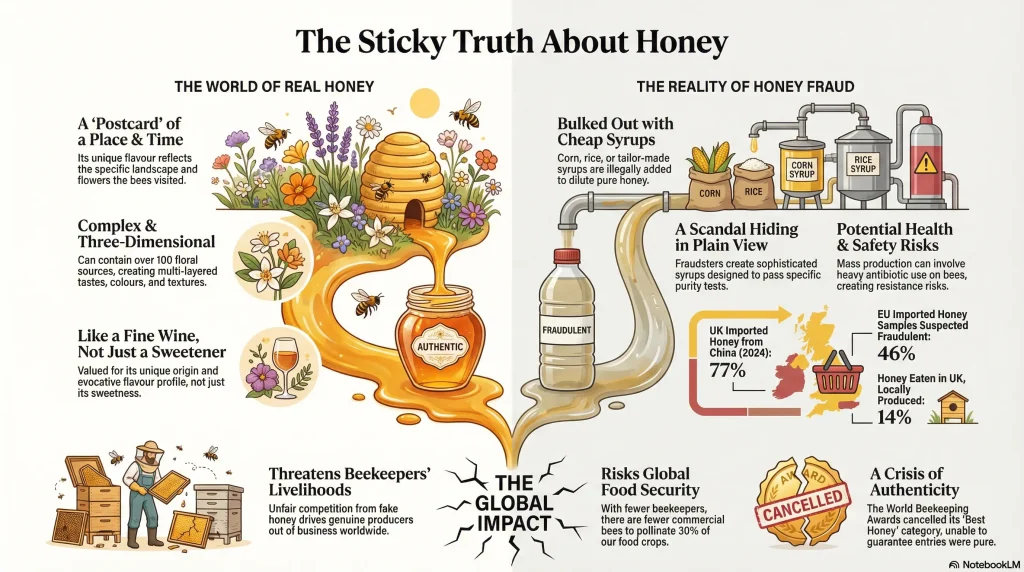
The episode features honey experts, beekeepers, scientists, and food fraud investigators exposing how global honey supply chains are riddled with adulteration. This includes:
- Feeding bees sugar syrup instead of letting them forage naturally.
- Diluting real honey with cheap rice, beet, or corn syrups.
- Blending international honeys and masking their origins.
- Faking pollen content to fool testing labs.
A staggering 46% of honey samples tested by the EU were found to be suspicious, and all 10 UK samples failed initial tests.
Why This Matters
Mass-produced, imported “honey” undermines:
- Food authenticity and consumer trust.
- The livelihoods of local beekeepers across the UK and worldwide.
- The health of pollinator populations, by incentivising unsustainable beekeeping practices.
- Public health, with reports of excessive antibiotic use in some mass-production operations.
As Sarah Wyndham Lewis of Bermondsey Street Bees said, real honey is “a picture postcard of a place and a time”. Not something anonymous and inert squeezed from a plastic bottle.
What Can You Do After Hearing the BBC Honey Trap?
Choose Local, Traceable Honey
Buy from trusted sources like local beekeepers, farm shops, and markets. At Staincross Apiaries, we’ve always believed in full transparency. That’s why jars sold after January 2021 feature a traceable code – you can enter it on our website to discover exactly where, when, and how your honey was produced.
Support “Real Honey” Campaigns
The programme highlighted calls for initiatives like a “Campaign for Real Honey,” similar to the Campaign for Real Bread. We wholeheartedly support this. It’s time consumers expect more of their honey, just as they do with wine, olive oil, and coffee.
Ask Better Questions
When you see “Blend of Non-EU Honeys” or “Product of More Than One Country” on a label – ask why. Ask who made it. Ask what the bees were fed.
Our Response to the BBC Honey Trap – Pure, Local Honey You Can Trust
We’re not in the business of selling something sweet – we’re in the business of bottling a landscape, a moment, and the work of hardworking bees. All our honeys are raw, local, and unblended. Our bees forage across the hedgerows and fields above Penistone. The flavour is never the same twice, and that’s the beauty of it.
We also offer:
- Beekeeping Experience Days & Gift Vouchers – connect with bees and learn about their world firsthand.
- Educational talks and workshops for schools, clubs, and food enthusiasts.
- Seasonal limited edition honeys with clear floral and regional traceability.