
I get asked about Asian hornets more than almost anything else these days. Partly that’s because I’m the Yorkshire Beekeepers’ Association’s county coordinator for them. Partly it’s because people have seen the headlines and want to know whether they should be worried.
The short answer is that you shouldn’t panic, but you should know what to look for.
What is it?
The yellow-legged hornet, usually called the Asian hornet, is a non-native hornet that arrived in France in 2004 and has spread across much of Europe since. It’s an aggressive predator of insects, and honey bees are top of its menu. It hovers outside hive entrances and picks off returning foragers one at a time. A badly affected colony can become too frightened to fly at all, and then it starves.
It takes wild bees, hoverflies and other pollinators as well, which is why this matters to everyone with a garden, not only beekeepers.
Is it in Yorkshire?
The first UK sighting was in 2016. For years the numbers were small and mostly in the south. That changed. By early July this year, the National Bee Unit had logged 99 credible sightings across the UK in 2026 alone, most of them in Kent and the south east.
Yorkshire hasn’t escaped. A nest was found and destroyed at Yarm in 2023, there have been finds around Hull, and a possible sighting was reported near Doncaster in February this year. Every confirmed nest so far has been destroyed, and that’s exactly why reporting matters. Catch them early and they can’t get a foothold.
How to tell it apart
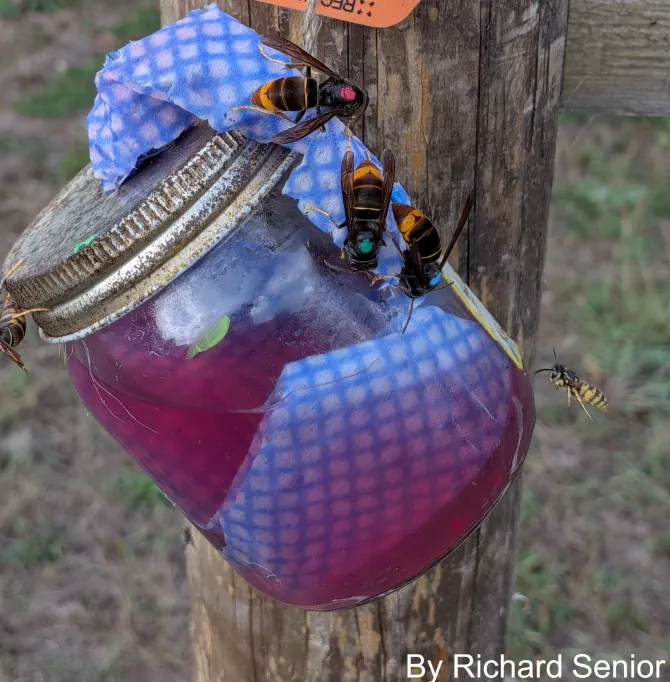
Most hornets people send me photos of are our native European hornet, which is bigger, browner and far less of a problem. Here’s how to tell the difference:
- The Asian hornet is almost entirely dark, with one orange-yellow band near the tip of the abdomen.
- Its legs are yellow at the ends, as if it’s been paddling in paint.
- Its face is orange.
- It’s slightly smaller than our native hornet.
Our native hornet has a mostly yellow abdomen with brown markings and brown legs. If what you’re looking at is largely yellow, it’s very unlikely to be an Asian hornet.
What to do if you think you’ve seen one
Don’t go near a nest. Asian hornets defend their nests fiercely, and the nests are often high up in trees where you won’t see them until the leaves drop.
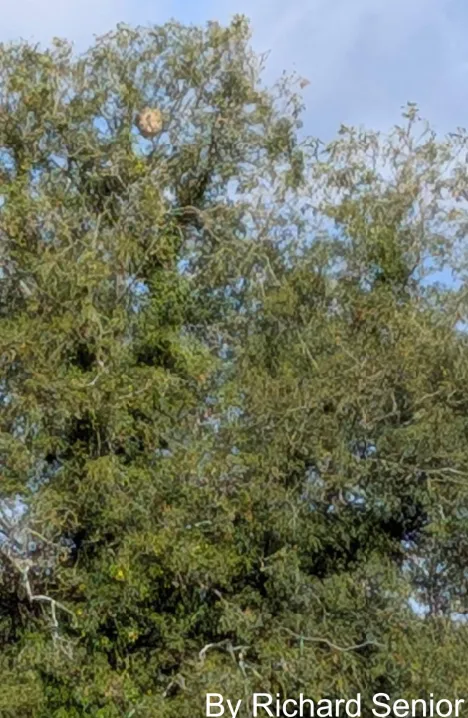
Take a photo if you can do it safely, and report it using the free Asian Hornet Watch app or the online reporting form on the Non-Native Species Secretariat website. A photo makes all the difference. Reports without one are much harder to follow up.
Why autumn matters
Asian hornets are active from spring through to November, but late summer and autumn are when their nests are biggest and their pressure on bees is at its worst. If you’re a beekeeper, now is the time to be watching your hive entrances. If you’re not, keep an eye on ivy flowers. Hornets love them.
For local beekeepers
If you keep bees in Barnsley or the wider area, get yourself involved with your local association’s Asian hornet team. We need eyes everywhere, and a beekeeper who knows what normal looks like at their own hive entrance is our best early warning system.
And if you’re not sure what you’ve seen, report it anyway. I’d far rather look at a hundred photos of native hornets than miss the one that matters.