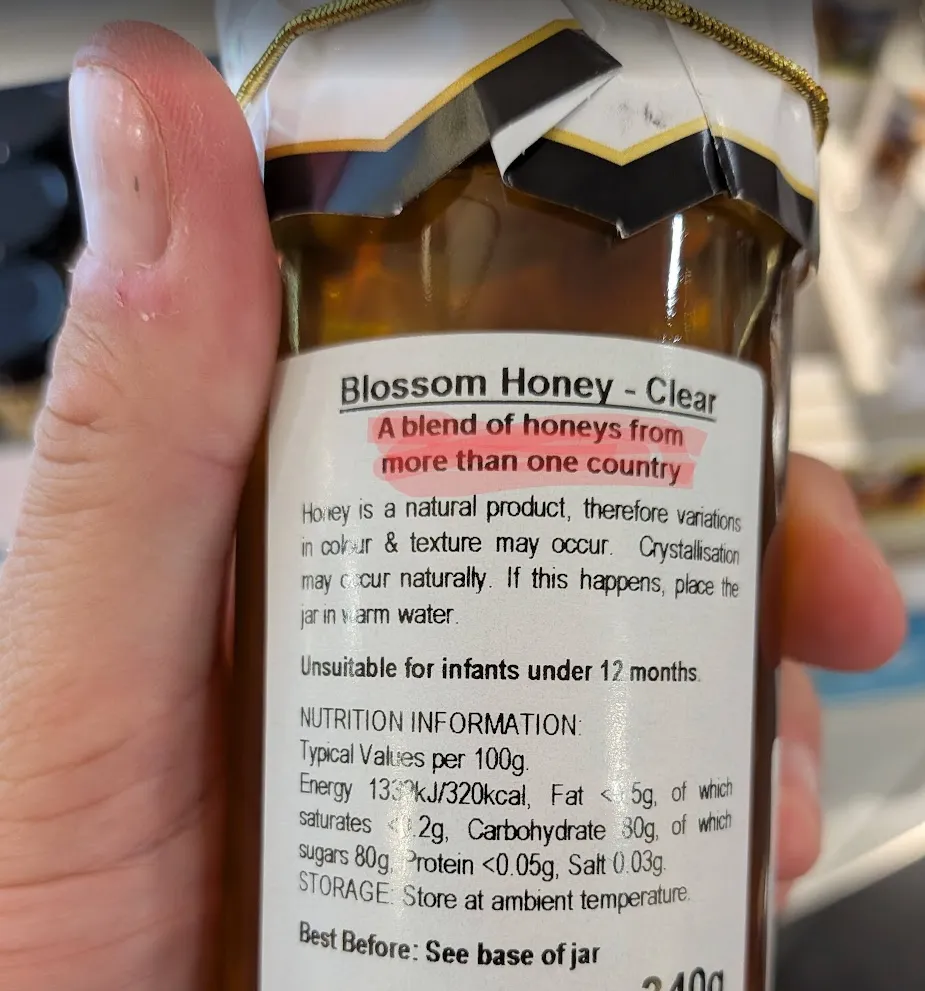
Pick up a jar of cheap honey next time you’re in a supermarket and turn it round. Somewhere near the bottom of the label you’ll probably find six words: “Blend of EU and non-EU honeys”.
That phrase covers a lot of sins.
What the label actually tells you
Honey sold in the UK has to say where it came from. If it comes from more than one country, the law lets the packer use a catch-all phrase instead of naming them. So “blend of EU and non-EU honeys” means the honey in that jar could have come from almost anywhere on the planet, mixed together in a factory somewhere along the way.
That doesn’t automatically make it fake. But it does mean you have no way of knowing what you’re eating.
The size of the problem
In 2023 the European Commission published the results of a big investigation into imported honey. Of 320 samples tested at EU borders, 46% were flagged as suspicious of being bulked out with cheap sugar syrups. Most of the suspicious consignments came from China, though Turkey had the highest proportion.
The bit that made headlines here was that every UK sample in the study was flagged. The Commission thought that was probably honey from other countries being blended in the UK and sent on. Defra disputed the testing methods and says there’s insufficient evidence of fraud. I’ll let you weigh that up yourself. What I’d say is this: honey is one of the most faked foods in the world, and the cheaper the jar, the harder it is to be sure.
Why it’s hard to catch
Sugar syrups made from rice, beet or corn can be refined to look very much like honey on standard tests. Much imported honey is also ultra-filtered, which removes the pollen. Pollen is how scientists can tell where honey came from. Strip it out and you strip out the evidence.
How to buy honey you can trust
- Check the country of origin. A single named country is better than a blend. A named county or town is better still.
- Look for a name and address. Small producers have to put theirs on the label. You can find them, ring them, visit them.
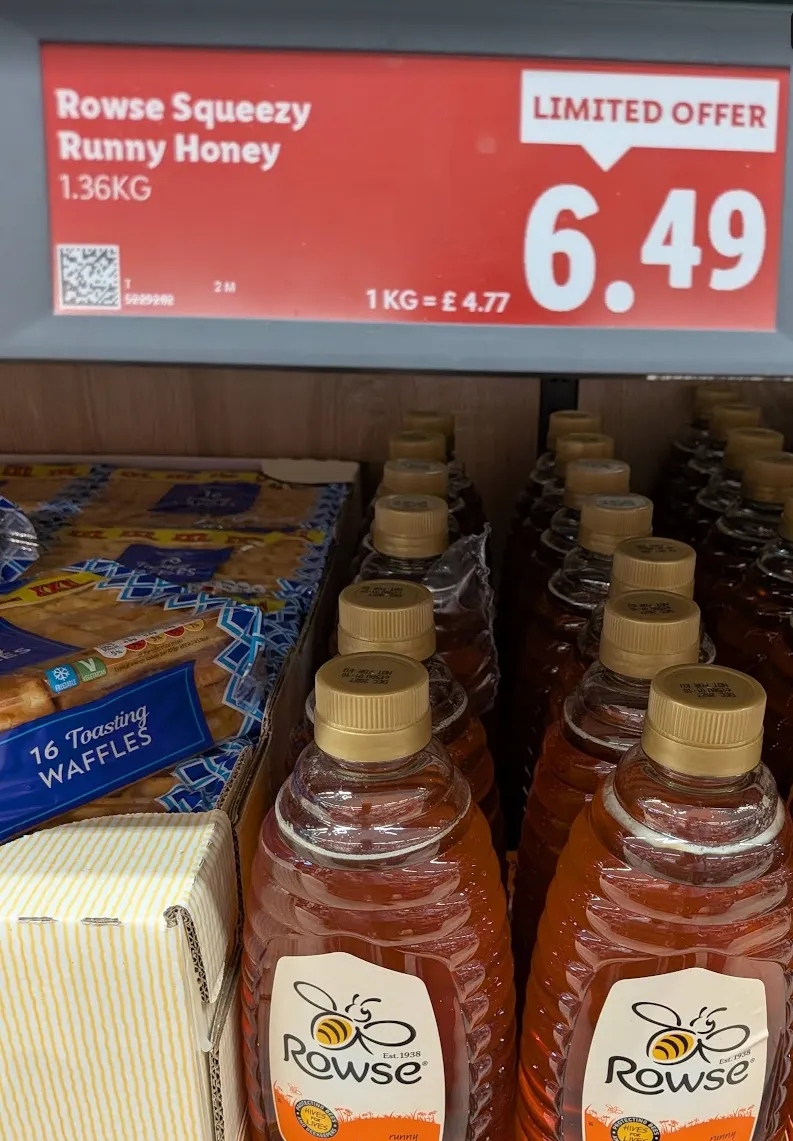
- Be wary of a very low price. Producing honey properly costs money. Bees, time, jars, fuel, sugar for winter feeding, treatments, equipment. A jar for a pound or two doesn’t add up.
- Expect it to set. Real honey crystallises sooner or later. A jar that’s been perfectly clear and runny on the shelf for two years has probably been heavily processed. I wrote more about that in why honey goes hard.
- Ask questions. A real beekeeper will happily tell you where their hives are, what the bees have been foraging on and when it was extracted. Most of us will talk your ear off.
Why local honey costs more
It’s a fair question. Our honey comes from our own hives around Staincross and the surrounding area. Nobody’s blending it with anything. It tastes different from season to season because the flowers change, and that’s the point.
So next time someone baulks at the price of a local beekeeper’s jar, remind them what’s in the cheap one. Or rather, that nobody’s quite sure.
If you want to read more about this, have a look at what makes Yorkshire honey special, or browse our honey in the online shop.