
Every beekeeper I know has a winter worry. Mine starts around now, when the ivy’s coming into flower, the evenings are drawing in and I start counting hives in my head at three in the morning.
The truth is that most colonies that die over winter don’t die in January. They die because of something that wasn’t sorted in August, September or October. So here’s what I’m doing across our apiaries right now, and what I’d suggest you check if you keep bees yourself.
Stores first
A colony needs enough food to last until the first proper spring flow. Here in South Yorkshire that can be well into April. As a rough guide, a full-sized colony wants something like 18 to 20 kilos of stores going into winter.
You don’t need to weigh every hive. Get used to hefting. Lift the back of the hive an inch off the stand and feel the weight. Do it often enough and you’ll know a heavy hive from a light one without thinking. A light hive in October is a hive that needs feeding now, while the bees can still take down syrup and store it. Once it turns cold, fondant is the safer option.
Varroa
This is the big one. Varroa weakens bees and spreads viruses that shorten their lives. The bees raised in autumn are the ones that have to last until spring, so they need to be as healthy as possible.
If you haven’t treated after the honey came off, you’re late, but not too late. Use an approved treatment, follow the label, and don’t forget to take strips out when the treatment period ends. Then plan a winter treatment for when the colony is broodless, usually around December. That’s when the mites have nowhere to hide.
Mouse guards and woodpeckers
When the nights get cold, mice go looking for somewhere warm with a food supply. A beehive is a five-star hotel. Fit mouse guards before the first frosts, not after you find a nest of chewed comb in February.
Green woodpeckers can also be a nuisance in hard winters. If you’ve had trouble before, a bit of chicken wire around the hive does the job.
Weather-proofing
Bees cope with cold far better than people think. What they don’t cope with is damp. Make sure roofs are sound, hives are tilted very slightly forward so rain runs off the entrance, and nothing’s sitting in a puddle.
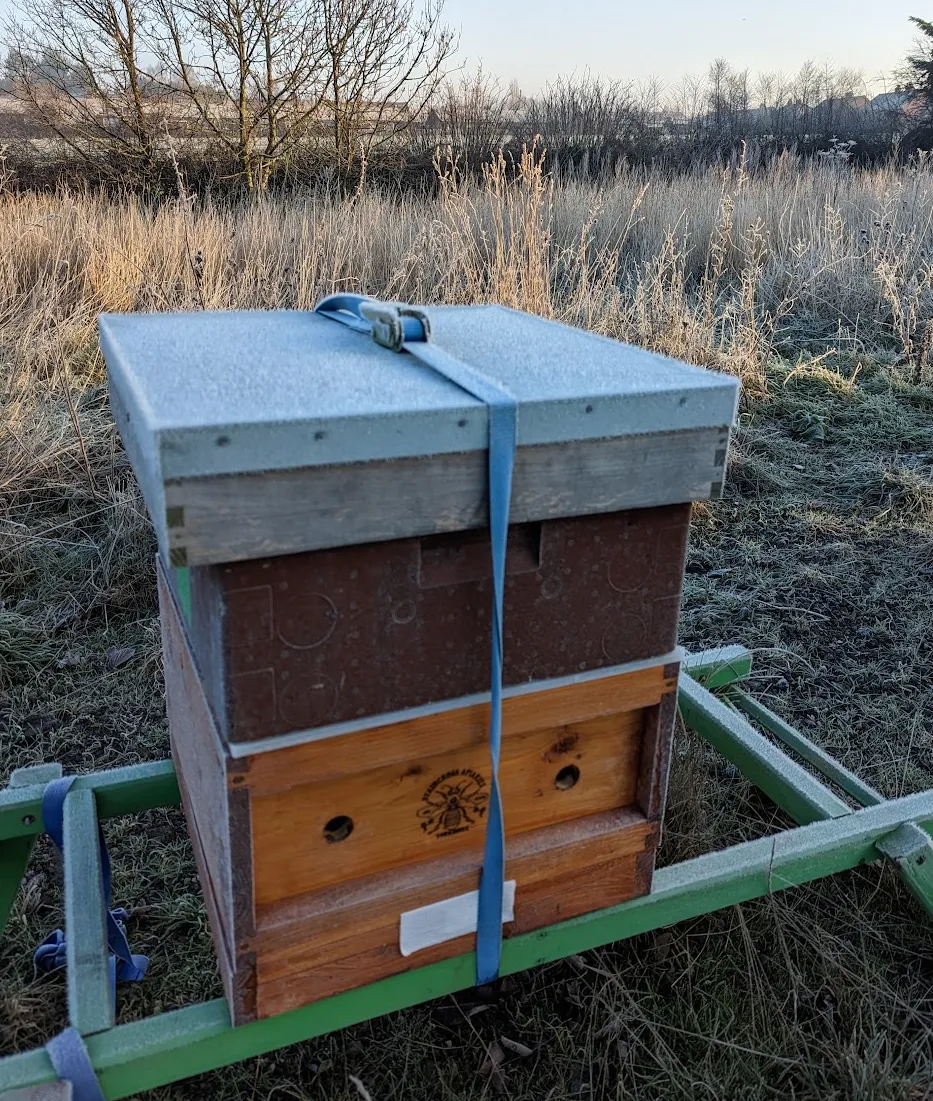
Strap your hives down. One autumn storm across the Pennines is all it takes to turn a hive over, and a colony with its roof off in November rarely recovers.
Keep an eye out for hornets
Yellow-legged Asian hornets are active well into November, and autumn is when they put most pressure on colonies. If you see something hawking outside your hive entrances that doesn’t look right, photograph it and report it. I’ll be writing more about this next week.
Then leave them alone
This is the hardest bit for new beekeepers. Once the work’s done, resist the urge to open up. Every time you crack the crownboard in cold weather you let the heat out and break the cluster’s careful seal. Heft, look at the entrance on mild days, check the roofs after storms. That’s it.
I learnt this the hard way in my early years. I was so desperate to know if they were alive that I nearly killed them finding out.
If you’re thinking about starting with bees next year, autumn and winter are the perfect time to learn. Have a read of So you want to keep bees? or come and see the hives on one of our beekeeping experiences when the season starts again.